

Springs and wells
Spring pipeline locating and germ-free inspection in Vienna, Lower Austria and Burgenland
At many spring catchments nobody knows exactly where the pipe runs any more: plans are missing, manholes are overgrown, the knowledge retired with the last water supply supervisor. CFT locates the route from the surface, runs a potable-water CCTV camera kept germ-free through the pipe and marks the points found. We travel to Vienna, Lower Austria and Burgenland for this: a short journey and appointments at short notice.

What we do on site
The emphasis lies inside the pipe: the drinking water camera, kept free of germs, shows the condition the run is actually in – deposits, sand ingress, root ingress, defective joints. Every irregularity is recorded as a still image, determined in position and depth and assessed in the section report for the stretch concerned. So that the metre reading from the survey gets a place on the ground, we take bearings on the route beforehand at the surface, a measuring point every two to four metres. What you receive in the end depends on the extent ordered: if it stays at locating and marking, the marking is the result – there is no record with it. If surveying is carried out, the position points are added as a file. Excavation and repair are not done by us.
Key facts at a glance
| Methods | Electromagnetic pipe locating, sonde location, germ-free camera survey run with the push-rod camera, surveying with the total station on request |
|---|---|
| Application range | Spring catchments, collection chambers, spring pipelines and collector mains, wells |
| Duration | Half a day to several days, depending on the number of spring pipelines, catchments and distances |
| Result format | Marking of the route at the surface; with surveying, the position points as .dwg, .dxf, .shp or .gpkg; with an inspection, video recording, still images and an inspection report with pipe run reports |
| Service area | Vienna, Lower Austria and Burgenland |
For you as a business
For water suppliers, cooperatives and municipalities, a spring catchment that is not on record is a double risk: it can neither be taken into account in the source protection zone nor protected during an excavation. We also locate pipes that appear on no plan, survey them in with the total station on request and prepare the results for your utility asset record.
How the job runs
1. Preliminary discussion. On the telephone we settle the installation, the observation and access. Have old plans and keys ready and name someone who knows the shut-off points.
2. Locating at the surface. We determine the route electromagnetically and by sonde. A point is sighted in every two to four metres – close enough that bends and changes of direction appear in the route and do not disappear between two points.
3. Camera survey run. The potable-water CCTV camera goes into the pipe through a manhole or a catchment. Anything conspicuous is recorded as a still image and located by way of the sonde in the camera head.
4. Marking and handover. The route is marked, surveyed in on request and handed over as a file. Where a survey run has been carried out, the inspection report with the pipe run reports comes with it; where matters rest with locating and marking, the marking is the result. After that your plumber takes over – CFT does not dig and does not repair.
Equipment and methods
Electromagnetic pipe locating
A locating signal is applied to the pipe and picked up again by a receiver at the surface; from this the route and the depth follow. With metal this works directly, with plastic only by way of a tracer wire or a sonde – where several pipes lie close together, the signal couples across.
Sonde location
A transmitter sonde is introduced into the pipe, usually in the camera head, and located from above: a bend, a joint, a buried catchment, each in position and depth. Tight bends, silting or a closed gate valve stop the sonde.
Germ-free camera survey run with the push-rod camera
For drinking water, separate push-rod cameras kept germ-free are used, not the equipment from the wastewater field. The image makes silting, root ingress, encrustation, displaced joints and cracks visible; a heavily silted pipe run has to be cleaned beforehand.
Surveying with the total station, on request
What happens to the located route is your decision: either matters rest with the marking at the surface, or we additionally survey the pipe in with the total station. Only the survey turns a marking that the next rain washes away into a permanent data set – it is a separate item and is carried out only to order.
What you receive
That depends on what you have ordered – and it is deliberately staggered, so that nobody pays for documents they do not need.
Locating and marking only. Then the marking at the surface is the result, and nothing else. A report is not part of it. That is enough where digging follows in any case and the paint only has to last until the excavator arrives.
With surveying. The surveyed-in position points come as a file: .dwg, .dxf, .shp or .gpkg – or in a format agreed beforehand. With that the route enters your asset records and outlasts the marking.
With a camera survey run. Added to that are the video recording, the still images of the conspicuous points and the inspection report with pipe run reports: one separate report for each section surveyed instead of one continuous list. What has remained open is in it as well – because the camera ended at a silted point, for instance.
Costs and effort
There is no flat rate, because there is no standard spring pipe run: length, accessibility, the number of catchments and the methods required determine the effort involved. We agree the cost range with you by telephone before the job – +43 (0) 2252 53169, Monday to Thursday 8:00–16:30, Friday 8:00–12:00. As a rule, buildings insurance pays nothing here: its leak detection cover applies to the building, not to the spring catchment and not to the supply pipe out in the ground.
Frequently asked questions
Does the spring have to be taken out of service for the inspection?
The camera needs an access point and a pipe that is not standing full and cloudy. What that means for your installation we settle in the preliminary discussion.
Does the camera affect drinking water quality?
We use potable-water CCTV cameras and crawler cameras that are intended for a germ-free environment and do not alternate between wastewater and drinking water.
What if the pipe is so silted that the camera cannot get through?
Then the survey run ends there, and that is exactly what the pipe run report for that section says – with the position. The next step is spring pipeline cleaning, after which the pipe run can be surveyed again.
Can you find a catchment for which there is no plan?
That is the normal case here: sonde into the pipe, sight the route in, mark it. Where the sonde does not reach the catchment, the recording ends there. There is no guarantee for every historical catchment – what remained open is named.
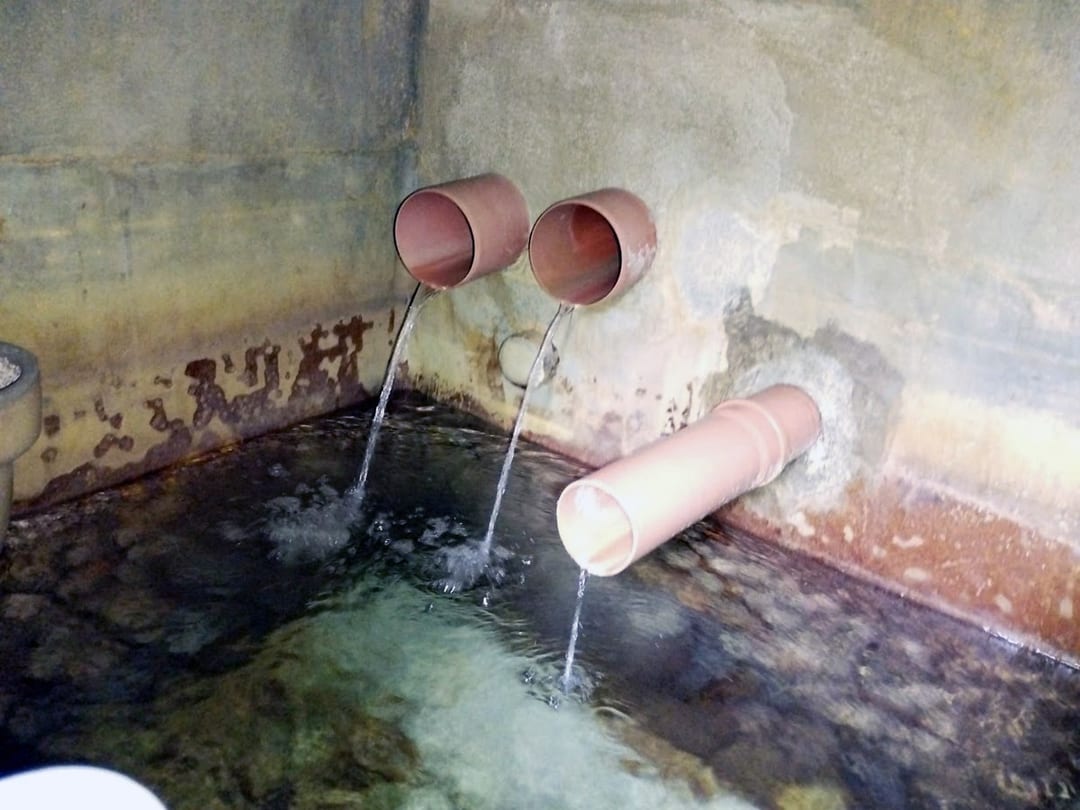
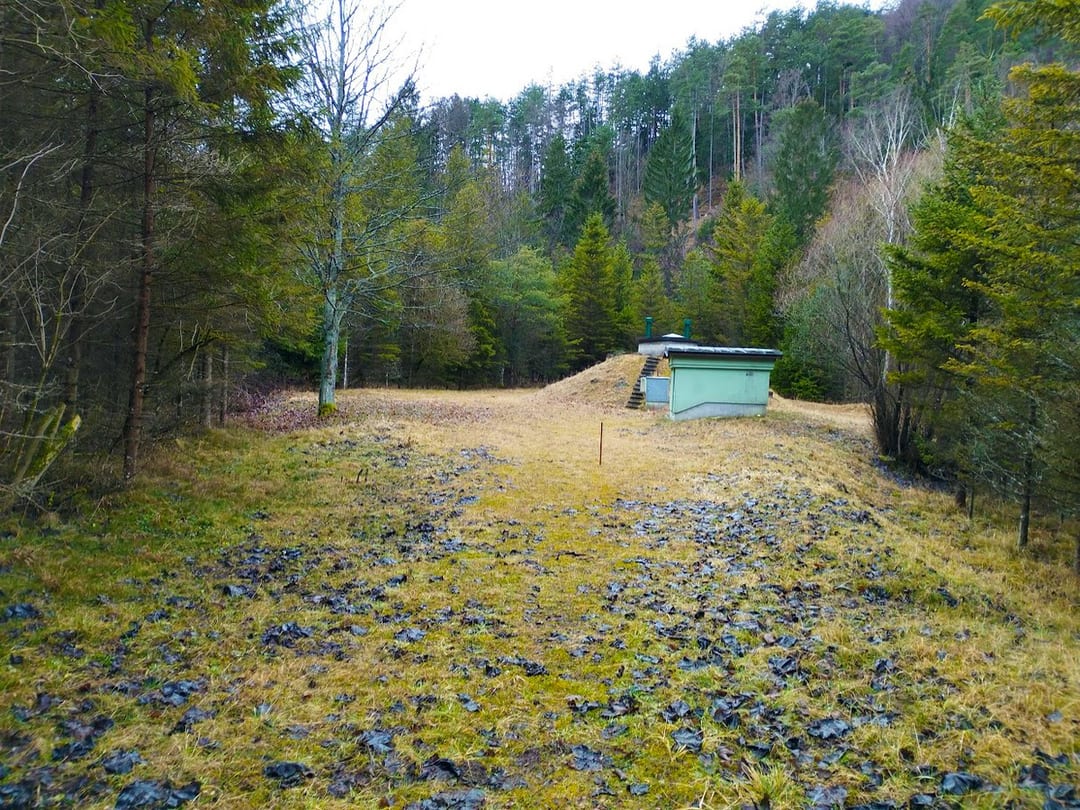
How we work in the field.
Related services
Spring pipeline cleaning
Where there is silting and root ingress, it restores the flow.
Service reservoir cleaning and disinfection
Drinking water compartments, cleaned with food-grade agents and disinfected.
Mains disinfection
With hydrogen peroxide, diluted on site and put on record.
Cable and pipe utility asset records for GIS
Individual locating jobs become a digital asset record.
Describe the findings.
The more precisely you describe the findings, the more directly we can go to work. Plans, readings and photos help us settle the method in advance.
What happens next
- We read your message and match the case to a method.
- We come back to you – usually with a question that shortens the appointment.
- We confirm the appointment and what it costs before anyone sets off.
Rather talk?
+43 (0) 2252 53169
Mon–Thu 8:00–16:30 · Fri 8:00–12:00
Describe your case.
Fastest by telephone – then we settle straight away which method fits and what you should prepare.
Outside office hours, write to office@cft.at.